I don’t know what the official slogan of Web Summit Vancouver may have been, but over and over, I heard the unofficial one: “It’s Coming.” It was easy to be swept up — wandering the exhibition hall, meeting zones, and speaker stages, you had the feeling of standing in the middle of the future.
Over a couple of days, I saw an autonomous vehicle concept that replaces internal displays with AR glasses, putting information directly into the rider’s field of vision. I heard conversations about the future of work, agentic creativity, AI, climate, film, marketing and what it means to build technology that actually serves people. On the exhibition floor, I met a founder developing a portable negative-pressure breathing vest — something like a wearable iron lung — designed to help people who can’t tolerate masks or need urgent respiratory support far from a hospital. His examples ranged from blast injuries in war zones to rural and First Nations communities where minutes can matter. It was one of those conversations that turns “innovation” from a buzzword back into something deeply human and real.
Technology may be changing fast, but the question of who holds power remains as urgent as ever.
I also caught Chris Smalls, the activist who helped unionize Amazon workers, speaking about billionaires, labour, exploitation and workers’ rights, fresh from his recent Met Gala protest. His message was pointed and uncompromising: technology may be changing fast, but the question of who holds power remains as urgent as ever.
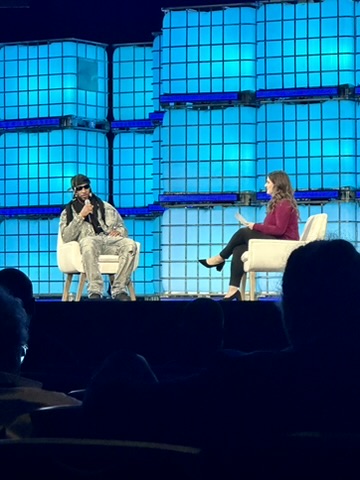
But the session that stayed with me most was Gabor Maté in conversation with Hasan Piker.
Maté spoke about trauma, loneliness, politics, the body and the systems that shape us. He began by reminding us that “trauma’s not what happened to you. Trauma’s what happened inside you as a result of what happened to you.” From there, he connected individual suffering to social conditions: isolation, inequality, colonial violence, capitalism and the loss of communal life.
His comments on loneliness felt particularly relevant in a room full of people building the next generation of tools. Human beings, he said, evolved in connection. For most of our history, children were raised by extended families and communities. Isolation, then, is not a personal failing. It is a social condition with real psychological and physiological consequences.
When Piker spoke about hope, Maté gently reframed it. Hope, he suggested, can point too far into the future. Possibility is more immediate. It asks: what can be envisioned, and acted on, right now?
That felt like the right note for Web Summit. So much is coming. The better question may be what we choose to build, who it serves, and how we stay human inside it. And as a North Vancouver local, ending the day by taking the SeaBus to Night Summit at the Shipyards was a lovely reminder that the future still needs a place to land, and creative, innovative, connected people to welcome it.